By Joe Crisara, America's service Sales Coach
We’ve all been there.
You’re in the middle of a call. Things seem like they’re going fine.
Then… something shifts.
A hesitation.
A weird comment.
A spouse isn’t home.
A little tension in your gut.
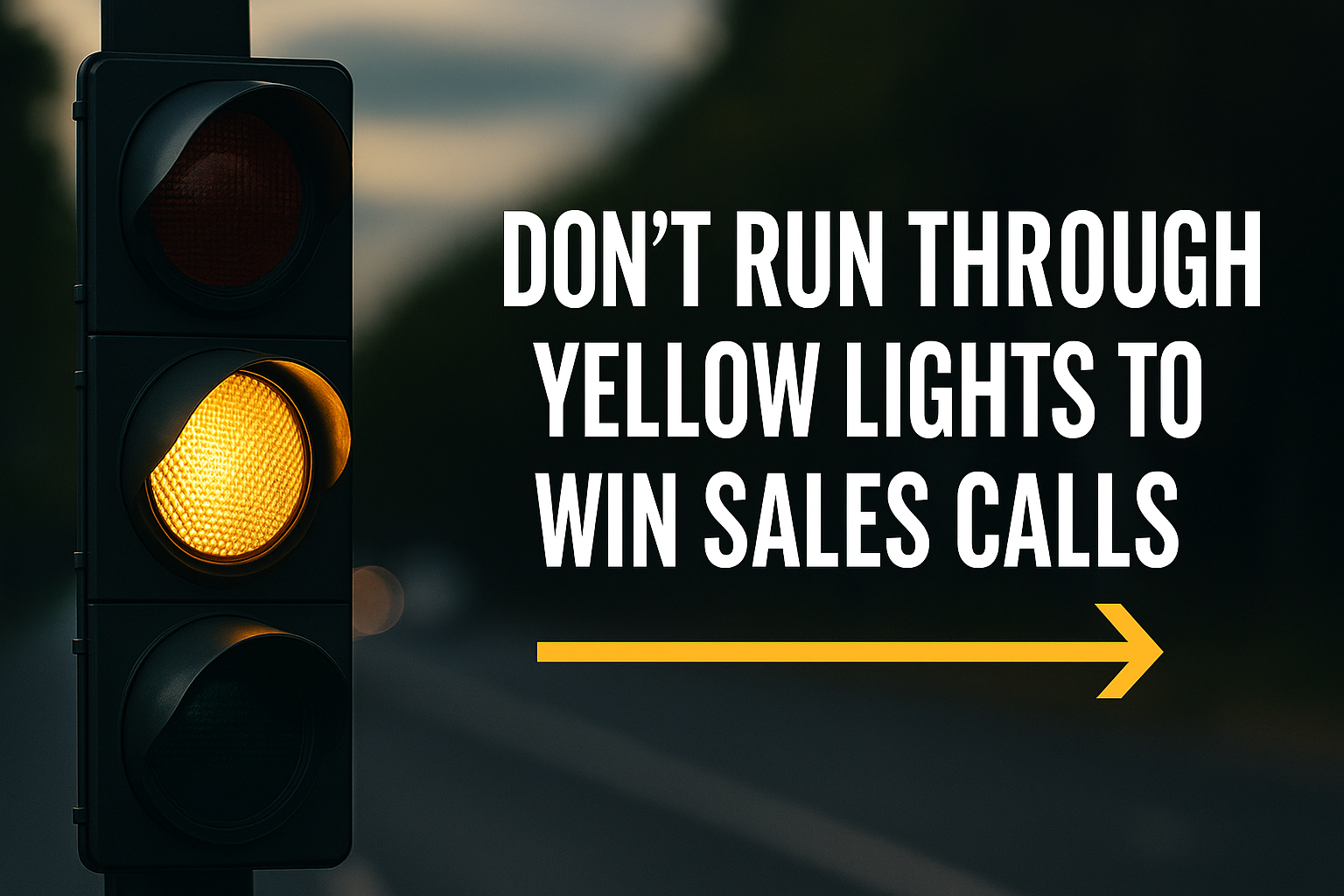
???? That’s a yellow light.
And if there’s one thing I’ve learned in over 40 years of selling, it’s this:
The worst thing you can do is blast right through them.
What a Yellow Light Really Means
Think back to your first driving lesson.
When the light turns yellow, what did your instructor tell you to do?
Slow down. Prepare to stop.
But in sales, a lot of people take the opposite approach. They see a yellow light and think, “I better floor it before the customer changes their mind.”
That’s how deals crash.
Short answer
What is a yellow light on a service call?
A yellow light is a micro-conflict — a sign that something isn’t aligned yet. It’s your opportunity to pause, reset, and guide the conversation back into trust.
What Yellow Lights Look Like in the Field
You’ve seen them before:
You’re ready to present your six options, but only one spouse is home.
???? Blink, blink, blink.
The customer says, “Just take a look and tell me what you think.”
???? Blink, blink, blink.
They mention the last tech charged way less than you.
???? Blink, blink, blink.
Most techs push harder in these moments — offer discounts, talk more, or try to “save the deal.”
That’s like flooring it through the intersection.
Two Types of Yellow Lights
1. External Yellow Lights
These come from what the customer says or does:
“I’m just getting estimates.”
“My husband isn’t home.”
“The last guy was cheaper.”
External lights are easier to see because they happen out loud. Your job is to recognize them and slow down. Ask questions. Re-engage using Pure Motive Service techniques.
2. Internal Yellow Lights
Internal yellow lights happen inside you.
That gut reaction that something’s off.
The thought: “This call sucks.”
The frustration when someone starts price shopping.
That inner voice? That’s your yellow light blinking.
When your emotions shift from serving to surviving, it’s time to pause.
A Real-World Example
Mary calls and says:
“Just take a look at my AC unit.”
???? Yellow light.
You show up, diagnose the issue, and tell her the price.
She says:
“Last guy charged me $95 and ripped me off.”
???? Yellow light.
You feel annoyed, drop your price to $90, and try to save the deal.
???? Yellow light flashing like crazy.
This is where most people lose it. You start thinking:
“This call sucks. I hate this job.”
That’s your internal yellow light screaming.
Instead, you could slow down and say:
“Mary, I’m not sure what happened last time, but if you’re saying anything over $95 eliminates me, we can stop right now.
On the other hand, if you’re open to investing a little more to make your home more comfortable, I’m happy to keep going.
What should we do?”
Now she has to make a decision.
Most likely, she’ll stay engaged — because you stayed calm and in control.
Winners Respond, They Don’t React
Remember the formula: Event + Response = Outcome.
The yellow light is the event.
Your response determines the outcome.
Slow down. Ask questions. Stay curious instead of defensive.
That’s how pros win calls that everyone else loses.
“Thinking ‘this call sucks’ is a signal that there’s a yellow light ahead. Slow down.”
Take Your Training Further
If this lesson hit home, it’s just one small part of the full What Should We Do? system.
You can dive deeper inside the Service MVP Club — where contractors like you train weekly with real-world scripts, videos, and lessons to master Pure Motive Service.
Or grab your own copy of the book, What Should We Do?, and start transforming every sales call into a confident, calm conversation.
