Current
Whole-System Evaluation
Understand what is happening throughout the system right now.
Great Technicians Diagnose More Than Equipment.
They Diagnose the Whole Situation.
Balanced Diagnosis teaches home-service professionals to combine the logical side of diagnosis—what is happening technically—with the emotional side—how the problem is affecting the people in the home.
Learn to evaluate the whole system, understand the people affected, uncover what has happened before and where the problem may be heading, then use that complete picture to create more relevant solutions.
Most service professionals are trained to diagnose equipment. But identifying what's wrong with a system is only half the diagnosis. The other half is understanding how those problems affect the people who depend on it.
Balanced Diagnosis brings those two sides together: the technical condition of the system and the victories, challenges, and priorities of the homeowner. It means looking beyond the immediate failure, evaluating the entire system, and discovering what truly matters to the people you're serving.
Balanced Diagnosis connects technical findings with real-life impact so recommendations are not just technically correct—they're relevant, meaningful, and easier for homeowners to understand. Participants learn how to build a range of solutions that address different levels of need, from resolving the immediate problem to addressing broader system conditions and opportunities for improvement.
Home-service professionals spend countless hours learning how to diagnose technical problems. That expertise matters.
But finding the exact component or technical issue is only part of the diagnosis. The other part is understanding how the problem affects the people who depend on that equipment.
The equipment can tell you what's happening technically.
Only the client can tell you how that problem affects their life, what concerns them, and what they want to accomplish.
You don’t have to choose between being a great technician and being great with people. Balanced Diagnosis teaches you to do both.
A balanced diagnosis takes the current system, the past, the people, the future and the available solutions into account.
Understand what is happening throughout the system right now.
Learn what has occurred before and what that history may reveal.
Understand how the problems affect the people who depend on the system.
Consider problems and risks that may trend into the future.
Create Premium / Mid-Range / Economy solutions from the complete diagnosis.
Start with the immediate problem, then broaden your view until you understand the entire system and situation.
Organize what you found into a deliberate sequence the client can understand clearly.
The order in which you diagnose does not have to be the order in which you present. First zoom out so you do not miss important information. Then organize what you found so the client can understand it clearly.
Balanced Diagnosis is not just about collecting technical information. Before presenting solutions, you should understand the situation well enough to answer seven essential questions.
Balanced Diagnosis works across home-service trades because the technical system may change, but the discipline does not.
Evaluate the system. Understand the technical facts. Understand the people affected. Learn what happened before and where the problem may be heading. Then connect the problems and solutions to the people they impact.
The class includes trade-specific observation tools, while Balanced Diagnosis gives service professionals a repeatable way to think and communicate on every call.
Electrical, plumbing, HVAC and other systems only have value because people depend on them.
Balanced Diagnosis teaches service professionals to stay grounded in technical facts while understanding how those facts affect the family using the system.
When both sides of the diagnosis are understood, problems become clearer, solutions become more relevant and the client is better equipped to make an informed choice.
Participants will practice how to:
Understand why technical diagnosis alone is incomplete and learn to balance whole-system evaluation with understanding the people affected.
Practice gathering, confirming and organizing both technical and people information before moving into solutions.
Apply the Balanced Diagnosis approach to real service situations and practice evaluating beyond the immediate component or complaint.
Put the Balanced Diagnosis process together in a simulated customer conversation, demonstrate the technical and people-side skills you've practiced, and receive coaching feedback on how to improve.
Each week, participants work through Service MVP training videos with a coach, discuss the concepts, practice realistic homeowner conversations, and receive feedback on their performance.
This is a guided learning experience built to help you turn what you watch into skills you can use in real customer conversations.
You'll learn the Service MVP system through the lesson videos, then practice it live with a coach who can see what a video can't. Your Mastery Coach will challenge you with real customer scenarios, listen to how you respond, help you refine your language and give you feedback so the techniques become natural—not memorized.
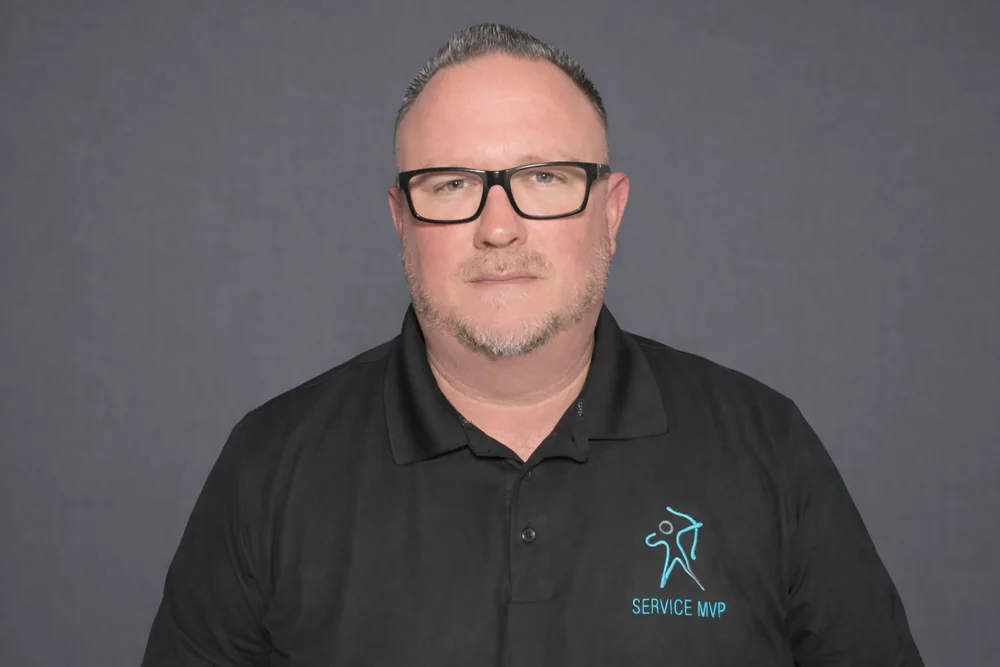
Matt brings 26 years of plumbing-industry experience to his coaching, from working in the field as a service plumber to leading teams as a service manager. His firsthand experience using service and sales systems with real customers gives him a practical approach to coaching. At Service MVP, Matt helps professionals build confidence, strengthen their communication skills, and turn what they learn in training into habits they can use in the home.

Tania brings a strong belief in Pure Motive Service and the impact it can have on both customers and service professionals. As a Service MVP coach, she focuses on creating a supportive learning environment where people can practice, receive feedback, build confidence, and make the Service MVP system their own. Her goal is to help each person leave training better prepared to use what they've learned in real customer conversations.
Available to eligible Service MVP coaching clients. Course materials and workbooks are accessible through your Service MVP account.
Watch your training videos, complete quizzes, and prepare for your guided coaching sessions.
OPEN MASTERY COURSEOpen your class workbook to follow along with lessons, complete exercises, and practice your skills.
OPEN WORKBOOKNext session begins the week of June 7, 2027. Choose the weekly class time that works best for you.
Each class meets for 90 minutes weekly over four weeks. Enrollment is subject to confirmation.
Strengthen the people side of Balanced Diagnosis by learning how to hear what matters to the client, uncover the Client Code, and make problems and solutions more personal and relevant.
Explore This ClassLearn how listening for victories, challenges, and personal details can turn what you discover during diagnosis into a genuine connection with the client.
Read the ArticleJoin Joe Crisara in MVP Club for ongoing training, practical strategies, and coaching to help your team communicate better, build trust, and present solutions with confidence.
Explore MVP ClubBring Joe Crisara into your business for hands-on service training and coaching built around your team, your customers, and the challenges you want to solve.